Africa, a continent brimming with ancient history and vibrant cultures, is a treasure trove of archaeological wonders. From grand cities that once thrived as centers of trade and power to mysterious stone structures cloaked in legend, these ruins offer tangible links to the ingenuity, artistry, and complex societies that shaped the continent. Each weathered stone and crumbling wall whispers stories of forgotten kingdoms, technological prowess, and profound human experiences.
Join us on a journey through time as we explore 10 remarkable ruins across Africa, inviting you to imagine the lives and legacies of those who built them.
1. Great Zimbabwe National Monument (Zimbabwe)
Standing proudly in the southeastern hills of Zimbabwe, the Great Zimbabwe National Monument is a UNESCO World Heritage site and an enduring symbol of the country’s rich pre-colonial heritage. These magnificent stone ruins, built by the ancestors of the Shona people between the 11th and 15th centuries AD, once served as the capital of a powerful kingdom. The most striking features include the Great Enclosure, with its impressive Conical Tower and formidable dry-stone walls, some reaching over 10 meters high and constructed without mortar. The purpose of the Great Enclosure remains a subject of academic debate, ranging from a royal palace to a ceremonial site. The ruins also encompass the Hill Complex, thought to be a royal residence or spiritual center, and the Valley Ruins, which housed residential areas and workshops. Great Zimbabwe was a sophisticated trading hub, evidenced by artifacts from as far as China and Persia found within its confines.

2. The Pyramids of Giza (Egypt)
Perhaps the most iconic ruins on the continent, the Pyramids of Giza located on the Giza Plateau near Cairo, Egypt, are the enduring symbols of ancient Egyptian civilization. Built as tombs for pharaohs during the Fourth Dynasty (circa 2580-2560 BC), the complex includes the Great Pyramid of Giza (for Pharaoh Khufu), the Pyramid of Khafre, and the Pyramid of Menkaure, along with the Great Sphinx. These monumental structures, once covered in polished white limestone, represent an astonishing feat of ancient engineering and labor organization. Their sheer scale and precision continue to baffle modern architects and engineers, leaving visitors in awe of the spiritual beliefs and technological capabilities of their ancient builders.

3. Leptis Magna (Libya)
Nestled on the coast of Libya, east of Tripoli, lies Leptis Magna, one of the best-preserved and most impressive Roman cities in the Mediterranean. Founded by the Phoenicians in the 7th century BC, it later flourished under Roman rule, particularly during the reign of Emperor Septimius Severus, who was born there. The ruins showcase a magnificent forum, a basilica, a grand theatre overlooking the sea, triumphal arches, and extensive public baths. Its well-preserved port, market, and residential areas offer a vivid glimpse into daily life in a bustling Roman provincial city, highlighting the sophisticated urban planning and architectural grandeur brought by the Roman Empire to North Africa.

4. Lalibela (Ethiopia)
In the Amhara region of Ethiopia lies Lalibela, a truly unique and breathtaking cluster of eleven monolithic churches carved directly out of living rock in the 12th and 13th centuries AD. Commissioned by King Lalibela, who sought to create a “New Jerusalem,” these churches are not built of stone, but literally sculpted downwards from the earth. Connected by a labyrinth of tunnels and trenches, each church possesses distinct architectural styles, with some entirely free-standing (like Bet Giyorgis, the iconic cross-shaped church) and others integrated into cave systems. Lalibela remains an active place of worship and pilgrimage, its ancient stones echoing with centuries of prayer and devotion.

5. Carthage (Tunisia)
Overlooking the Gulf of Tunis, the ruins of Carthage represent what was once one of the most powerful cities of the ancient world. Founded by the Phoenicians in the 9th century BC, Carthage grew into a formidable maritime empire, rivaling Rome. The archaeological site, spread across several locations, reveals remnants of Roman Carthage built atop its Punic predecessor. Visitors can explore the Antonine Baths, one of the largest Roman bath complexes outside of Rome; the remains of Roman villas; the Punic ports; and the Byrsa Hill, which offers panoramic views and houses remnants of the Punic and Roman cities. The ruins bear witness to a rich history of trade, warfare (particularly the Punic Wars with Rome), and cultural exchange.

6. Kilwa Kisiwani (Tanzania)
Off the coast of Tanzania, on an island, lie the ruins of Kilwa Kisiwani, once a thriving Swahili trading city that flourished from the 9th to the 19th centuries. A key stop on the Indian Ocean trade routes, Kilwa prospered through the exchange of gold, silver, pearls, perfumes, and textiles. The ruins include the magnificent Great Mosque, one of the oldest mosques on the East African coast; the Husuni Kubwa palace complex, with its elaborate pools and courtyards; and various domestic and public buildings. These remains offer invaluable insights into the architecture, urban planning, and economic power of the medieval Swahili civilization, demonstrating its significant role in global trade networks.

7. Djenne-Djenno (Mali)
Situated in the inland Niger Delta of Mali, near the modern town of Djenné, lies Djenne-Djenno, an ancient city site that dates back to 250 BC. It is considered one of the oldest urban settlements in sub-Saharan Africa. The ruins consist of mounds (tell) formed by centuries of accumulated mud-brick structures. Archaeological excavations have revealed evidence of a sophisticated pre-Islamic city with iron production, a complex social structure, and extensive trade networks, particularly in salt and copper. Djenne-Djenno provides crucial evidence against the long-held belief that complex urbanism in West Africa was solely introduced by external influences, showcasing indigenous development.

8. Volubilis (Morocco)
In central Morocco, near the city of Meknes, are the remarkably well-preserved ruins of Volubilis, a former Roman city. Founded in the 3rd century BC by the Mauretanians, it later became an important outpost of the Roman Empire, flourishing particularly in olive oil production. The site boasts stunning mosaic floors still in situ, grand basilicas, triumphal arches, a capitol, and remnants of impressive houses and baths. The ruins of Volubilis vividly illustrate the extent of Roman influence in North Africa and provide a captivating glimpse into provincial Roman life, art, and architecture.

9. Mapungubwe Cultural Landscape (South Africa)
Located at the confluence of the Limpopo and Shashe rivers in Limpopo Province, South Africa, the Mapungubwe Cultural Landscape was home to a powerful kingdom that thrived between 1000 and 1300 AD. It was a sophisticated trading center, predating Great Zimbabwe, with evidence of trade links to Egypt, India, and China. The ruins include a royal hilltop settlement, a series of smaller settlements, and burial sites. The most famous artifact is the golden rhinoceros, a testament to the kingdom’s metallurgical skills. Mapungubwe offers profound insights into early South African complex societies, social stratification, and the intricate trade networks that existed across the continent.

10. Meroë (Sudan)
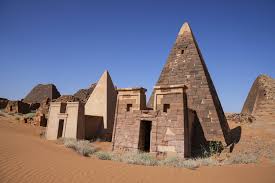
Along the banks of the Nile River in Sudan lie the spectacular pyramids and ruins of Meroë, the ancient capital of the Kingdom of Kush. Flourishing from around 300 BC to 350 AD, Meroë was a major power in ancient Nubia, developing its own unique script (Meroitic) and a distinct architectural style that blended Egyptian, African, and Greco-Roman influences. The site boasts over 200 narrow, steeply sloped pyramids, often smaller and more numerous than their Egyptian counterparts, serving as tombs for kings and queens. Alongside the pyramids, there are temples, royal baths, and the remains of a sophisticated iron-working industry, revealing a powerful and culturally rich civilization often overlooked in popular historical narratives.

These 10 sites represent just a fraction of Africa’s immense archaeological heritage. Each ruin is a testament to the diverse and sophisticated civilizations that have flourished across the continent, offering invaluable insights into human history, innovation, and resilience. Visiting them is not merely a journey through physical remains, but an immersive experience into the heart of Africa’s extraordinary past.