Yurts: Nomadic Homes with African Roots?
What is a Yurt?
A yurt is a traditional, portable, circular tent-like structure with a lattice frame and a felt covering. Originating from the steppes of Central Asia, yurts have been used for centuries by nomadic pastoralist groups like the Mongols and Turks.
A Glimpse into Yurt History:
- Ancient Origins: The earliest known structures resembling yurts date back to the Bronze Age in Central Asia.
- Nomadic Life: Yurts were perfectly suited for the nomadic lifestyle, offering quick assembly and disassembly, allowing for easy relocation as the seasons changed and grazing lands were sought.
- Resilience and Adaptability: Their circular shape and flexible frame make yurts highly resistant to strong winds and snow, crucial for survival in harsh climates.
Yurts and the African Round Hut: Striking Similarities
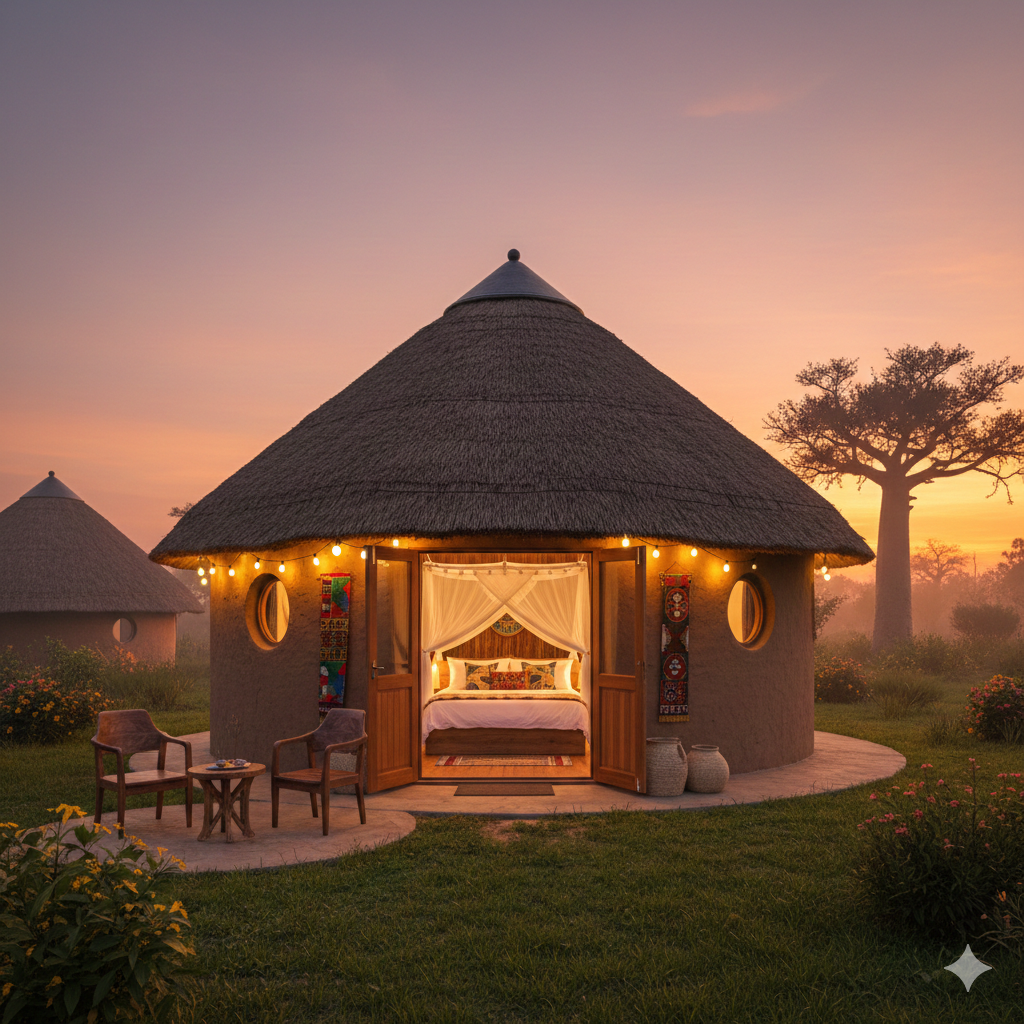
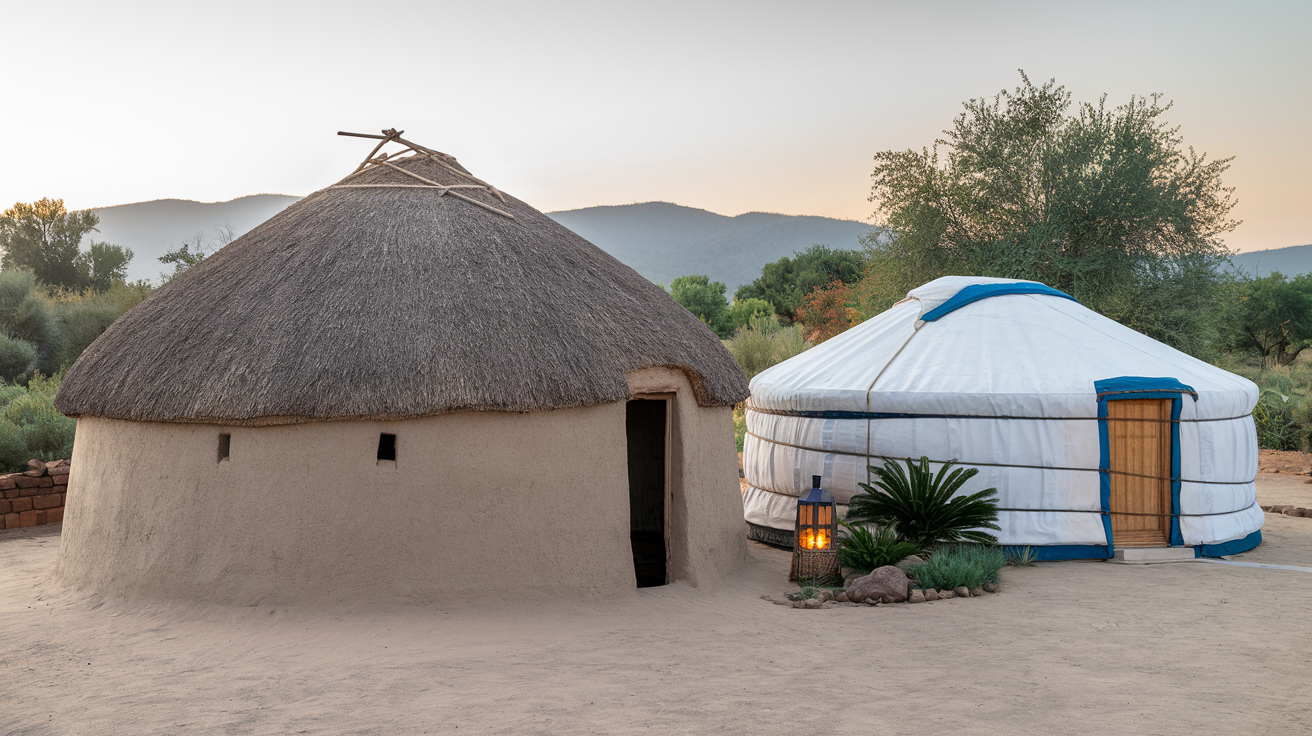
While originating in different parts of the world, yurts share remarkable similarities with the traditional African round hut: - Circular Shape: Both structures utilize a circular design, maximizing interior space and offering a sense of unity and community.
- Natural Materials: Yurts traditionally use felt, a natural and readily available material, while African round huts often incorporate thatch, another abundant natural resource.
- Portability (in some cases): While many African round huts are permanent structures, some are designed for portability, particularly among nomadic tribes.
- Focus on Ventilation: Both structures prioritize natural ventilation, crucial for maintaining a comfortable interior temperature in varying climates.
Experiencing Yurt Living in Africa:
While not as common as traditional round huts, yurts are finding their place in the African tourism landscape. Many eco-lodges and glamping sites offer unique yurt accommodations, providing guests with a glimpse into this fascinating nomadic dwelling.
Rural BnB Africa:
If you’re interested in experiencing unique and authentic African accommodations, consider exploring the options offered by Rural BnB Africa. They connect travelers with a diverse range of rural homestays, providing opportunities to immerse yourself in local culture and perhaps even encounter a modern interpretation of the traditional round hut.